Podcasts have become the most trusted format in media today, and they’re increasingly how startups build brand, credibility, and real relationships with their audience. Not the fake LinkedIn kind of relationships. The actual ones.
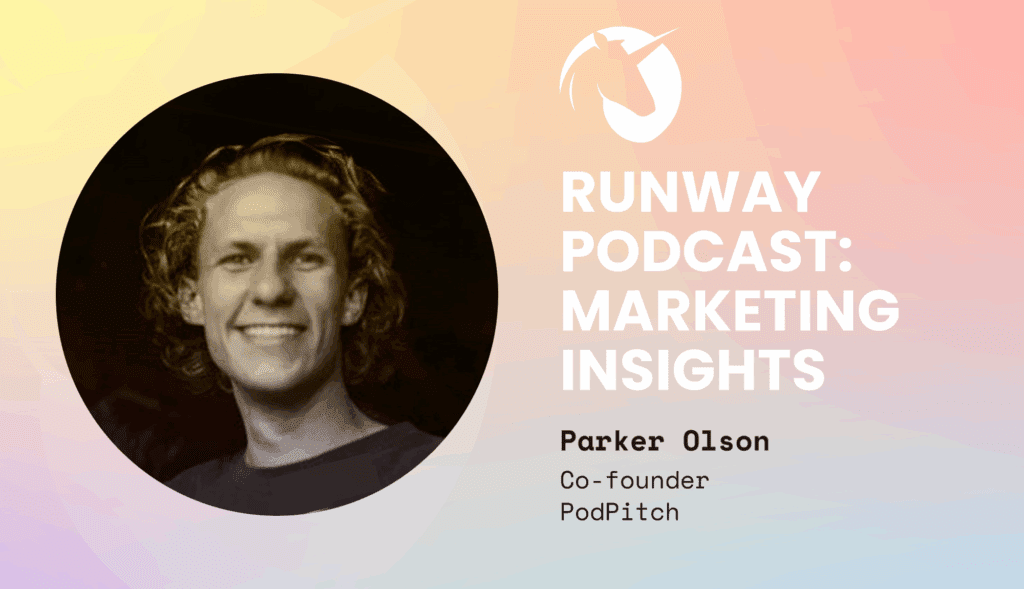
In this episode of The Runway Podcast, we spoke with Parker Olson, co-founder of PodPitch, an AI-powered tool helping founders and comms professionals land podcast interviews at scale. From the nitty-gritty of podcast outreach to long-term brand strategy, Parker delivered tactical gold on how businesses can get podcasting right.
Here are 10 standout lessons from the episode to help you unlock the power of podcasts.
1. Podcasts Build Trust That Traditional Media Can’t Touch
Parker makes a compelling case for integrating podcasts into your broader thought leadership and PR strategy. While articles and traditional interviews win on credibility, editorial control, and reach, podcasts offer something different: tone, storytelling, and direct, unfiltered connection.
As Parker put it, “You’re not just being quoted. People hear your voice, your ramble, your nuance. It builds a type of trust that’s hard to replicate elsewhere.” Especially in B2B, that emotional resonance built over 30-60 minutes of uninterrupted attention is incredibly powerful. Try getting that from a 300-word quote in TechCrunch.
2. Guesting Helps Founders Sharpen Their Messaging
You don’t need a polished pitch to start podcasting. In fact, guesting early can help you find one. Parker encourages startup teams to use podcast appearances as real-time messaging labs. Try explaining your value proposition in different ways on different shows. Pay attention to what lands. What excites the host? What confuses them? Which phrases do you feel most confident repeating?
Just going through the motions of explaining what you do, again and again, in public, forces clarity. That’s valuable for founders, comms leads, and early team members who still stumble when someone asks what they actually do at cocktail parties.
3. Bigger Isn’t Always Better (Shocking, We Know)
One of the most common misconceptions Parker hears? That you need to land the biggest shows for podcasting to be worthwhile. Wrong. Niche shows often have more engaged listeners, higher conversion potential, and stronger alignment with B2B audiences. “It’s not about getting in front of everyone,” Parker says. “It’s about getting in front of the right people, in the right context.”
He shared how PodPitch clients often see stronger ROI from shows with a few hundred highly targeted listeners than mass-market podcasts with thousands. Quality beats quantity. Who would have thought?
4. Podcast Guesting Isn’t Just Acquisition, It’s Brand Engagement
Most people view podcast appearances as top-of-funnel exposure. But Parker highlights another key use case: re-engagement. When used correctly, podcast content can be repurposed into newsletter segments, drip campaigns, LinkedIn clips, or even onboarding content. One PodPitch customer saw their best-performing email campaign ever come from embedding a podcast clip in their sales nurture flow.
The result? Podcasting becomes a multi-use asset, not just a one-and-done moment. Your accountant will thank you.
5. The Host Is a Lead, Not Just the Interviewer
One of Parker’s smartest observations is how often guests overlook the host as a relationship opportunity. Whether you’re a founder trying to grow your network or a comms team managing relationships, the host is often your most direct line into a new ecosystem.
“After the show, ask them: do you know other podcast hosts who’d be a good fit?” Parker suggests. “It’s the warmest referral you’ll ever get.” Over time, podcasting becomes a relationship engine, part network building, part business development. Finally, networking that doesn’t feel like you need a shower afterward.
6. Use Appearances as Proof Points to Unlock More Opportunities
Parker shared a clever tactic used by one PodPitch user: every time a podcast declines their pitch, they’re added to a BCC list. Each month, that list gets an update email: “Here are the shows I’ve been on recently, just in case you’d like to revisit.”
And guess what? Hosts respond. Momentum builds. The flywheel turns. This cumulative credibility, built over time, is what makes podcasting a long game. It’s also why early guesting on small shows matters more than most people think.
7. Think Beyond Awareness (Podcasts Can Fuel the Whole Funnel)
Smart teams don’t stop at audience reach. Parker encourages founders and marketers to look at podcasting as part of their conversion and education strategy too. From embedding episodes into landing pages to using clips in outbound sales or investor decks, a well-framed podcast appearance can serve as social proof, education tool, and brand differentiator when repurposed across channels.
Because why do something once when you can squeeze every drop of value out of it?
8. Podcasts Help You Build Authority Inside Your Own Ecosystem
Not every startup needs to go viral. Parker believes the future of influence is micro. The goal? Become the go-to expert in your space for your community, your category, and your clients. Podcasting, especially when paired with consistent content distribution, helps reinforce your role as a trusted authority inside your niche. If you’re always speaking on relevant topics, people notice. And when they need your expertise, they’ll come to you first.
It’s like being the neighborhood expert, but for your industry.
9. It’s OK to Start Small (Just Start Smart)
Don’t fall into the trap of chasing only marquee shows. Parker argues that appearing on “smaller” podcasts early on is often more beneficial. They’re easier to get into, more open to new voices, and offer space to experiment with your delivery. Plus, they act as training grounds. By the time you’re invited onto a top-tier podcast, you’ve had reps, you’ve refined your story, and you’re ready to shine.
Think of it as the minor leagues, but for thought leadership.
10. The Best Guests Aren’t Famous, They’re Useful
Lastly, Parker underscores one golden rule: podcast hosts care about value, not vanity. You don’t need a massive following to be booked. You need a clear, useful, relevant angle. Especially for niche podcasts, practical insight beats polished pitch every time.
His advice? Know your audience. Know the show. And bring something that’s genuinely helpful. Revolutionary concept, right?
Final Thoughts
Podcasts are no longer a “nice to have” in the startup comms stack. They’re a high-trust, long-tail format that rewards consistency, insight, and strategic execution. As Parker Olson shows, with the right mindset and a smart workflow, podcast guesting can sharpen your messaging, grow your audience, and deepen your credibility. Not just once, but again and again, long after the mic goes off.
🎧 Want to hear the full conversation? Listen to the full episode with Parker! And do check out PodPitch.
More advice, tips and tricks from our podcast guests:
Financial Times Contributor Nick Huber Tells Us What Every Startup Founder Should Know About Comms
5 Key Lessons from Eric Melchor on Podcasting and Building a B2B Community
5 Essential LinkedIn Lessons with Kotryna Kurt of Linkedist
How to plan, write and pitch the perfect op-ed: insights from op-eds expert Jake Meth
B2B Tech Marketing Insights from Silicon Valley Veteran Gregory Kennedy
Fundamentals of B2B Marketing with Julieta Varsano of Upvest