In the past, a venture capitalist’s value was measured in capital and deal access. Connections and other perks existed, but largely in an unstructured way. And, most of the time, you didn’t really know what you got. But in 2025, that’s no longer enough. As founders look for true partners, VCs are rethinking how they support startups. And community is emerging as a key differentiator.
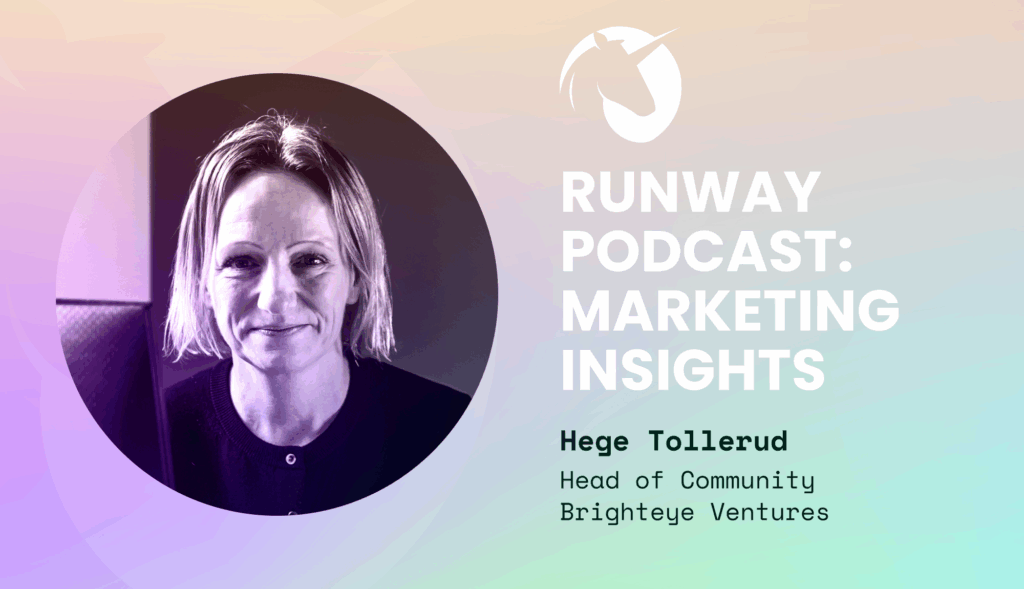
We sat down with Hege Tollerud, Head of Community and Events at Brighteye Ventures, to explore how building human connections, trust, and peer networks is reshaping venture support. With a background that spans media, ecosystem building, and edtech leadership, Hege brings a global lens on what meaningful community actually looks like in venture capital.
1. Community Is Not a Perk Anymore — It’s Increasingly a Core Offering
For many funds, community still feels like a nice-to-have. A way to throw the occasional event or share a newsletter. But Hege sees it differently: community is infrastructure. It creates belonging, drives founder well-being, and facilitates real value through introductions, knowledge-sharing, and trust.
Early-stage founders are often overwhelmed and isolated. Having a support network of peers, advisors, and like-minded operators can make the difference between persistence and burnout. “Founders want to feel seen,” Hege says. And the best community efforts deliver that consistently.
2. Platform Roles Are Redefining VC from the Inside
Hege is part of a growing wave of non-investor professionals inside VC, the so-called “platform” function. At Brighteye, she oversees events, communications, portfolio engagement and more. It’s a role that didn’t exist in most European funds a few years ago, but is quickly becoming essential. It’s the evolution from non-existent or unstructured support, to a more structured one.
From talent to brand, these roles help funds compete not only for deals, but for reputation and relevance. The VC Platform Global Community, which Hege is part of, has grown rapidly, with thousands of members now across Europe and the US. And the trend shows no signs of slowing.
3. Events Are Not Enough, They Need Purpose
It’s easy to say community matters and host a few drinks. But Hege stresses that without clear goals and intentional design, events risk becoming performative. “Startups shouldn’t go to events just to hang out,” she says. “They should know what they want to achieve — and follow up.”
Brighteye’s approach includes intimate portfolio summits, founder dinners, and expert workshops. Each is crafted to create peer learning, solve real-time problems, and help founders avoid common mistakes. Even external events are opportunities if founders are strategic in how they use them.
4. Community Starts with Connection (Not Content)
Content plays a role, but it’s only effective when layered on top of relationships. For Hege, the most important community function is acting as a connector. That means knowing what a founder needs, be it a hire, an investor, a warm intro. And finding the right person to help.
This is where generalists with deep networks shine. It’s less about having a formal program and more about being proactive, present, and genuinely curious. “Sometimes the most valuable thing we do is say, ‘You should talk to X.’ And that opens up everything,” she notes.
5. Good Storytelling Is a Community Tool, Too
Narrative isn’t just for media relations. It helps create shared understanding. Hege often helps portfolio founders simplify their story, especially when prepping for funding rounds. But more importantly, she encourages them to communicate in a way that others, such as investors, peers, mentors, can more easily amplify.
“Make it short, clear, and human,” she advises. If founders can explain their product in under a minute to someone outside their industry, they’re more likely to benefit from network effects and word of mouth. In this case, complexity kills potential.
6. Founders Shouldn’t Be Forced, But They Should Be Invited
Not every founder is a natural community builder. Some are introverts, others are time-starved. Brighteye’s approach? Create opportunities, not obligations. “We never force portfolio founders to attend anything,” Hege says. “But we do make it easy for them to say yes.”
From optional check-ins to curated mentor networks, the goal is to offer value… without guilt. The best communities are opt-in. They work because they respect founders’ time and create a space where people want to participate.
7. Community-Driven VC Is a Long Game
You don’t build community in a quarter. For Hege, the real value shows up when a founder lands a new customer from a warm intro, solves a team issue thanks to peer support, or simply feels less alone.
That’s why Brighteye invests in it. Not just for visibility, but because it leads to stronger outcomes. As Hege puts it, “If you do community well, it touches every part of the VC journey — from sourcing and selection, to support and follow-on.”
Want more of Hege’s insights on building better VC support?
🎧 Listen to the full episode on The Runway Podcast.
More advice, tips and tricks from our podcast guests:
Financial Times Contributor Nick Huber Tells Us What Every Startup Founder Should Know About Comms
5 Key Lessons from Eric Melchor on Podcasting and Building a B2B Community
5 Essential LinkedIn Lessons with Kotryna Kurt of Linkedist
How to plan, write and pitch the perfect op-ed: insights from op-eds expert Jake Meth
B2B Tech Marketing Insights from Silicon Valley Veteran Gregory Kennedy
Fundamentals of B2B Marketing with Julieta Varsano of Upvest
Zoltan Vardy’s Blueprint for B2B Enterprise Sales
10 Podcast Marketing Lessons from PodPitch Founder Parker Olson
Want to bring this thinking to your portfolio? See our PR workshops for VC portfolio companies.