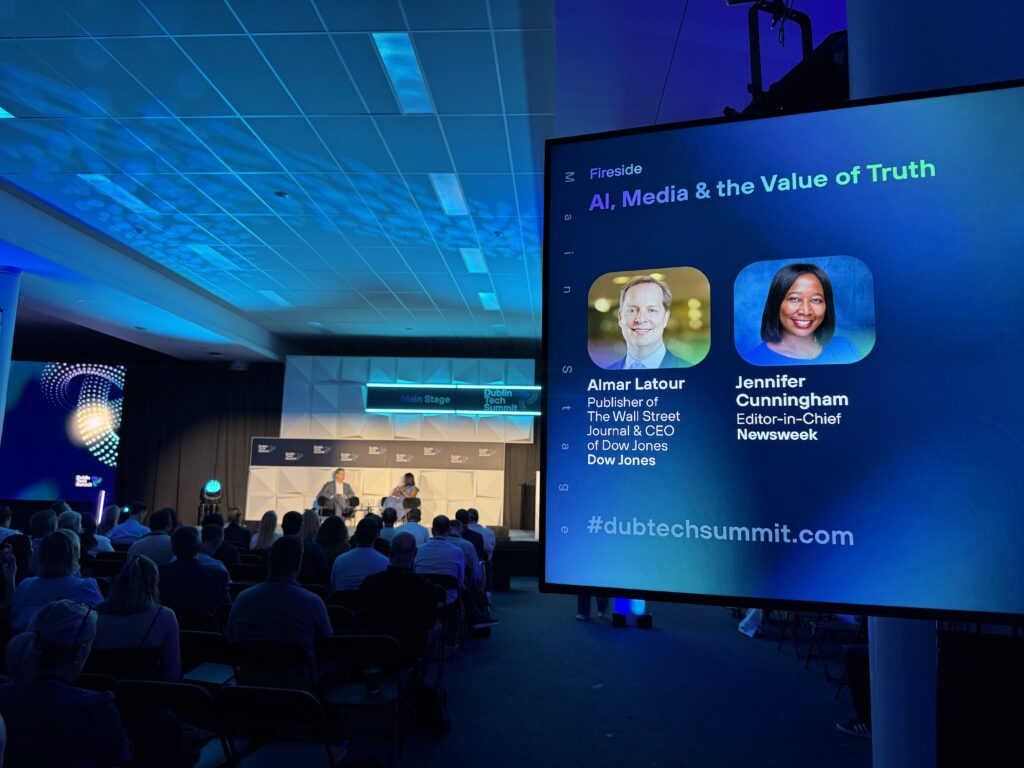
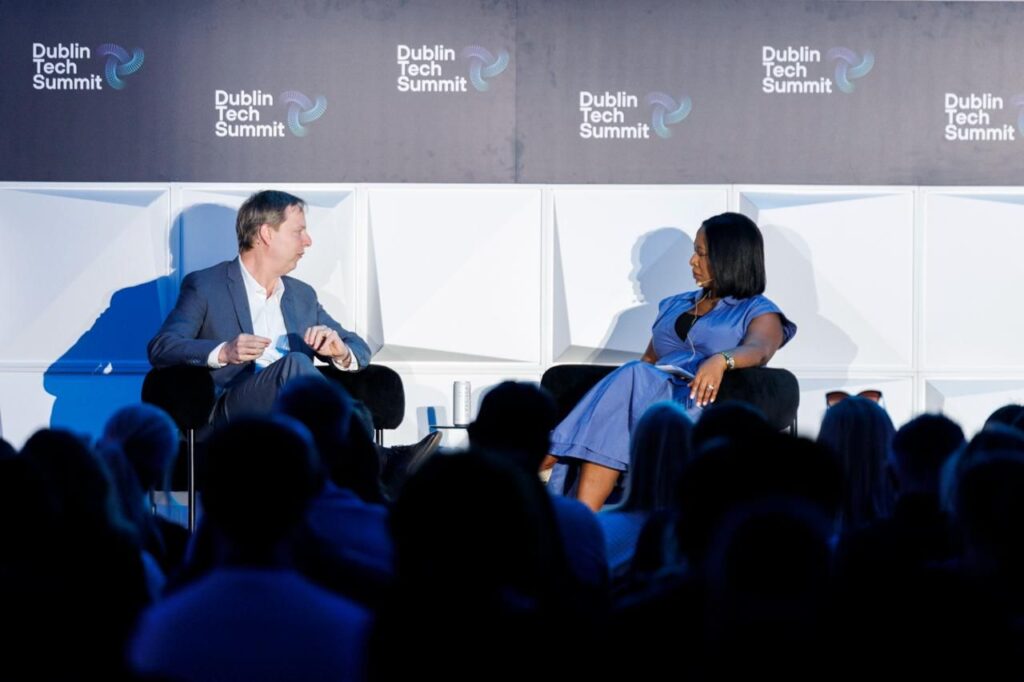
As PR and media nerds, we loved the fireside chat with Almar Latour, CEO of Dow Jones and publisher of the Wall Street Journal, moderated by Newsweek’s Editor-in-Chief Jennifer Cunningham. The conversation centred on the state of the media, the impact of AI, and the value of truth today.
It feels that, with the surge of AI, we are beginning to understand much more clearly the value of truth and of journalistic media. Over the past few years, it had been under attack by tech leaders and even venture capitalists, especially in the US. Likely, because they might not appreciate that not all journalistic endeavours are to paint their companies in the best possible light. Many of them have called on founders and startups to skip media, skip the ‘intermediary’ and go direct on X, other social media and their owned channels. Ironically, since those days, it seems the opposite is true. Not only did owned channels fail to replace journalism, but also journalism is rediscovering its worth in the age of AI.
It all seems to point to the fact that the age-old wisdom about third party validation still holds, and will still hold, in the future. In fact, WSJ success surged in the last years, and Latour attributes it to an information landscape in which it became harder to know who to trust. And the WSJ experience confirms that impartial, trustworthy media organisations have an important role to play in this future, along with a new and very real opportunity to make their business models sustainable. Whether that vision succeeds, though, may depend on a few things. Here is our roundup of the conversation.
The re-discovered importance of impartial, high-quality journalistic media
The news cycle is unprecedented. What once took years to unfold now happens in months, if not weeks. Wars and warfare, abrupt shifts in international relations and domestic politics, and the rise of AI are all reconfiguring the economy.
Against that backdrop sits an information landscape where content is easier to produce, and easier to spread, than ever before. As Latour put it, “the information ecosystem is poisoned currently.”
That is precisely what makes journalism so valuable, so powerful. The nuance, depth and editorial judgement it brings come from journalistic training and tradition, and organisations that deliver trustworthy information reliably see their brands rewarded with readers’ trust.
The best journalism has curious journalists who pursue their truth. As humans, mistakes can happen. But, ultimately, Latour argues their impartiality makes the journalistic product more valuable than other information. He sees the pattern in their own data: the higher the trust in the publication at a given moment, the better the conversion they see. The WSJ, in other words, has a vested interest in being and staying trustworthy – it’s good for business.
How AI is being used at WSJ
Latour also shed light on how the Journal is using AI itself, mainly for technical purposes, but also for translation, which helps it expand into more markets. AI also lets the paper put its own information to use in new ways, for consumers and corporate users alike.
None of this has settled yet. We are in a period of discovery, and whatever emerges will likely be multi-faceted. The use cases for the long term, and the potential new ways to pay for them, are still largely to be worked out.
Why respecting copyright is absolutely essential
Copyright is a live issue right now, and not only for journalistic media. AI companies have drawn on all kinds of freely available information to train their models, including material protected by copyright. Latour’s own preference is to reach commercial agreements with AI companies and turn that into an ongoing commercial model.
After all, WSJ journalists have spent considerable time and money gathering information and reporting it, billions of dollars over the years. The “search and advertising” model that emerged with the internet made much of that information, those articles, more widely available, but even that was never a great model.
For Latour, the rise of AI is several orders of magnitude bigger than the internet, and we cannot afford to repeat the same mistakes, or we risk losing trustworthy, quality publications and the reliable information they produce. Keeping them means keeping up the fight for copyright, and Latour admits the WSJ is pursuing some lawsuits of its own.
The takeaway is to keep a close eye on what happens with content, because standing up for copyright is what keeps reliable information and the companies behind it going, and there could be real trouble for media and journalism if the industry does not get the AI question right.
How WSJ bucked the trend of disappearing publications
The media industry has tended to chase profit through austerity: cutting back, laying people off, and so on. Not so at the WSJ, which focuses instead on adding where it can generate growth, sustainably. Latour says the Journal has had some of its best years as consumers demand more trusted sources of information, and he believes the model they are employing can be deployed more widely. In general, he is an optimist about media.
The future, five years from now
Asked how he sees the media in five years’ time, Latour noted that prediction is harder than ever, with so much in flux and the geopolitical landscape in such a rapid phase of transition. On the media side, he sees the future as resting on some kind of broad understanding on copyright between AI and tech companies on one side and media companies on the other. Without it, the business model and viability of journalistic media would be compromised, and with them, the health of our information ecosystem.