
If you want to understand what makes Baltic founders tick, you could read ecosystem reports and funding round summaries. Or you could ask someone who spent four years and over 200 episodes sitting across from them, digging into the stories behind a wide range of startups.
Uldis Tēraudkalns is the co-creator of The Pursuit of Scrappiness (together with Janis Zeps, fellow Latvian), the most popular English-language business podcast from the Baltic region. Over the course of the show’s run, he interviewed everyone from the co-founder of Wise to the CFO of Intel, along with dozens of the region’s most interesting up-and-coming builders.
Uldis isn’t a media professional or career interviewer. He’s a finance and technology executive who served as CEO of regulated fintech Nexpay, worked in investment management, and has most recently co-founded OkoRide, a mobility startup bringing technology and fleet optimisation to ride-hailing in Riga. For more on OkoRide, check out the second part of the pod, starting at 34:26.
The Pursuit of Scrappiness paused in late 2025, but we wanted to find out why, why now, and see if we could distill some of the learnings from the pod. Lucky for us and our listeners, Uldis joined Mauro on Runway to talk about what he learned from all those conversations: what Baltic founders have in common, how the region’s ecosystem has evolved, what separates the founders who make it from those who don’t, and why he eventually hung up the microphone (for now?).
What follows is a summary of the main insights he shared on the pod. Happy reading!
1 – Scrappiness Isn’t a Buzzword. It’s a Structural Advantage.
The name of Uldis’s podcast isn’t accidental. When asked what sets Baltic founders apart, he comes back to the same word: scrappiness. But he’s not using it as a feel-good label. He’s describing a specific trait produced by a specific set of conditions.
The Baltic states freed themselves from the Soviet Union and found themselves having to start virtually from zero in capitalism. Limited capital, small domestic markets, and no natural resource wealth to fall back on. Technology, Uldis argues, became the obvious path because it’s one of the most democratic economic activities available: you need a computer and brains, and you can make something happen. The cultural habit of doing more with less wasn’t a lifestyle choice. It was a survival strategy that became a competitive advantage.
“I’ve had empirical evidence from being in companies, working with companies, and talking to founders to basically test the hypothesis of why Baltic companies are successful,” he says. What he found confirmed the thesis: the fusion of cultural frugality, post-Soviet economic constraints, and early technology adoption created a founder DNA that produces outsized results from limited resources.
And that DNA persists even as the ecosystems mature. The region now has functioning angel networks, active VCs, and government support structures. But the underlying instinct to stretch every euro remains embedded in how companies operate and how some of the most recent giants formed (you will see in a later section on one of the Baltic countries).

2 – Small Markets Force Global Thinking (But That’s Not the Only Path)
One of the most commonly cited advantages of building in a small market is that you’re forced to think internationally from day one. Uldis agrees, but with a nuance that deserves attention.
He points to a phenomenon he observed across his episodes: founders in larger but still mid-sized European markets sometimes fall into what he calls a “mid-market trap.” They invest heavily in their local market, optimise everything around serving that geography, and then struggle to expand globally because their entire operation is built for a market that isn’t big enough to sustain a large-scale business but is big enough to feel comfortable. Baltic founders, by contrast, don’t have that luxury. Three million people in Lithuania, two million in Latvia, 1.3 million in Estonia (and maybe we’re being generous with rounding here). There’s simply no option to get comfortable locally.
Uldis, though, has shifted his own thinking over time. He challenges the former ‘common wisdom’ that time spent on local customers is time wasted. His go-to example is ss.com, a Latvian online classifieds site (think Craigslist) that has no global ambition, a handful of employees, full market dominance, roughly 50% net profit margins, and hasn’t meaningfully updated its product in years. Challengers appear regularly and fail consistently.
“By any kind of technology startup financial metric standards, they’re doing exceptionally well,” Uldis says. The point isn’t that every company should aim to be ss.com. It’s that the VC-funded unicorn path isn’t the only valid model, and the post-2022 market correction has made that clearer than ever.
3 – Lithuania’s Rise: Going After Estonia’s Lunch Money
At the beginning of The Pursuit of Scrappiness, roughly half of the episodes featured Estonian companies. That wasn’t just editorial preference. It reflected the ecosystem reality. Estonia was the undisputed leader in Baltic tech, with multiple unicorns and a founder community that was extraordinarily well-networked and mutually supportive (more on that in a moment). They had the most funded startups and success cases.
What Uldis watched happen over four years was Lithuania’s emergence as a serious contender. “It really cemented itself, going after that Estonian lunch money,” he says, with a grin you can hear through the recording, even though he is Latvian. Massive companies started building one after another: unicorns, VC-backed, bootstrapped. Many of the bootstrapped companies have now raised, not out of desperation, but strategically. For many of them it has made their valuation public, although they were already huge, it made that real for the rest of the world.
For anyone tracking European tech ecosystems, this inter-Baltic competition is worth watching. It’s not hostile. It’s more like sibling rivalry channelled productively. And it mirrors a broader CEE trend: Poland, which started from a similar economic baseline, is now the 20th largest economy in the world, with an explosive growth trajectory across infrastructure, military, and tech (and lots of startup traction too).
The macro pattern is clear. The economies that emerged from Soviet-era constraints with the least inherited advantage seem to be the ones running hardest.
4 – What the Founders Who Went Furthest Have in Common
After 200+ conversations with founders at every stage from pre-seed to unicorn, Uldis has a surprisingly non-prescriptive answer to the question of what separates the ones who make it. There’s no single personality type, no checklist, no founder archetype. Some are extroverted storytellers, others have to be coaxed into conversation.
But three things kept showing up here and there: a degree of what he calls “insanity,” a refusal to accept an industry or product as it currently exists; a vision strong enough to pull others in; and, almost universally, an ability to tell stories well.
Good storytelling matters more than most founders realise. Not just for fundraising or press, but for recruiting, for aligning teams, for making sense of a complicated product in 30 seconds. The founders who went furthest were the ones who could articulate not just what they were building, but why the world needed it. And that storytelling capacity often correlated with the kind of deep conviction that keeps you building when everything else suggests you should stop.
5 – The Estonian Solidarity Effect
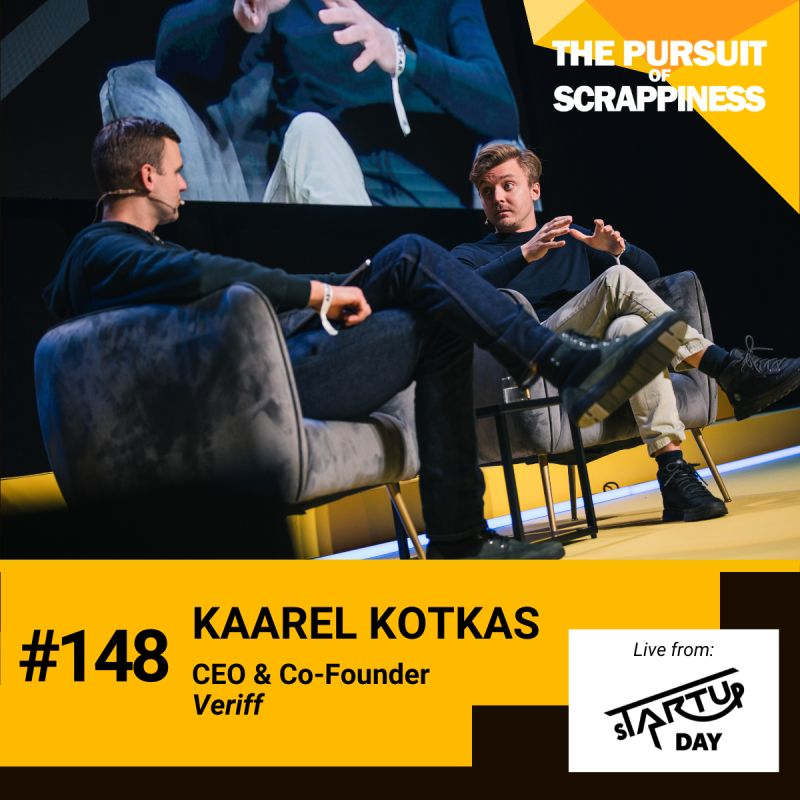
One of the more specific observations from running the podcast relates to how different Baltic ecosystems behave when you ask for introductions. Estonian founders, Uldis found, are remarkably supportive of each other. Ask one for guest recommendations and you’d get five names, some of them already introduced before you’d even confirmed you wanted them.
This isn’t just a nice cultural footnote. It has tangible ecosystem effects. A community where founders actively promote each other creates a referral network that accelerates everything: talent flow, deal flow, media coverage, knowledge transfer. It’s one of the reasons Estonia punched so far above its weight in the first place.
Whether the other Baltic ecosystems replicate this remains to be seen. Latvia and Lithuania are building their own dynamics, but the Estonian model is a genuinely distinctive feature that’s hard to manufacture from the outside.
6 – Meta-insight: Starting a Podcast Is a Strategic Move. Knowing When to Stop Is Harder.
Uldis started The Pursuit of Scrappiness during COVID, born from a WhatsApp group chat with entrepreneur friends who noticed the same gap: there was almost no English-language podcast content covering the Baltic startup ecosystem in any systematic way. Or at least nothing fun, like a kind of fireside chat where the speakers share in-depth, but don’t take themselves too seriously. Two of them decided to do something about it.
His motivations were layered and worth listing because they apply to any founder or comms professional considering a podcast: first, embedding himself in the ecosystem (he was running Nexpay and working mostly with clients outside the Baltics, so he felt disconnected); second, strengthening his personal brand and employer brand for recruiting; third, building a network that would otherwise have been inaccessible. Getting on a call with someone like Tavet Hinrikus isn’t something that happens organically. A podcast gives you a reason.
These are remarkably pragmatic motivations, and they worked. But they also had a natural expiry date. After four years, the ecosystem connections were made. The recruiting needs had changed. The format felt repetitive. And the honest truth is that a niche English-language podcast about Baltic startups was never going to be a significant commercial success. The other motivations had to be strong enough to carry it.
Uldis doesn’t rule out a return, but his explanation for the pause is refreshingly direct: “I just felt like those conversations are sometimes repeating and it’s just not as fun as it used to be.” When the motivation shifts and the format isn’t evolving fast enough, the honest thing to do is to stop, not to grind out another 50 episodes out of obligation. There’s something to learn from that for anyone running content that’s starting to feel like a chore.
7 – The VC Path Isn’t the Only Path
A thread running through much of Uldis’s commentary in our conversation is frustration with the idea that the only legitimate way to build a technology company is through VC funding aimed at a unicorn valuation. He sees this as something the ecosystem got “carried away” with, a narrative that was partially cleaned up by the post-2022 market correction. Yup.
More founders now are pursuing profitable, cashflow-positive businesses from day one. More are raising selectively or not at all. The bootstrapped success stories are getting recognition. And the culture is shifting toward a more pluralistic view of what “success” looks like in tech. One interesting example might be OkoRide itself, and to hear that story, do tune into the pod!
🎧 This article is based on a conversation from The Runway Podcast featuring Uldis Tēraudkalns. Listen to the full episode for the complete chat, including more about his new startup, OkoRide (from 34:26).
Main Takeaways from our conversation with Uldis
Interested in the Baltic startup ecosystem or in building media as a strategic tool? If you’re not able to listen to the whole conversation, here’s a good primer on the things he shared:
- Scrappiness in the Baltics isn’t a personality trait. It’s a structural advantage produced by culture, history, and small domestic markets
- Technology became the natural path for Baltic founders because it’s democratic: you need a computer and brains, not natural resources or cheap labour
- Small markets force global thinking, but don’t dismiss local opportunities. Some of the best businesses are deliberately local and deliberately profitable
- Lithuania has emerged as a serious challenger to Estonia’s dominance in Baltic tech, with both unicorns and large bootstrapped companies
- The founders who went furthest share conviction, vision, and storytelling ability, not a single personality type or pedigree
- Estonian founders are exceptionally supportive of each other, creating a referral and support network that accelerates the entire ecosystem
- Starting a podcast is a legitimate strategic move for building network, brand, and ecosystem access, but the motivations have to be strong enough to sustain it past the novelty
- When content stops being fun and the original motivations expire, the honest move is to pause, not to grind out episodes out of obligation
- The VC-funded unicorn path isn’t the only model worth pursuing. The post-2022 correction has made space for profitable, bootstrapped, and intentionally small tech companies
- The CEE region, and the Baltics in particular, is outperforming in growth metrics, driven by a generation of founders who learned to build with less and haven’t lost the habit
Enjoyed the insights from Uldis? Check out the rest of our blog!
A Series of Fortunate Events: Black Unicorn PR at TechChill 2026
Journalist’s Insights: Tarmo Virki, Co-Founder of FOMO.Observer
Journalist’s Insights: David Cendón Garcia, News Editor at EU Startups
Journalist’s Insights: Cate Lawrence, Senior Writer at Tech.eu
The Funding Announcement Is Dead. Long Live the Funding Announcement?